
The architecture of anthills is truly amazing.
The floor plans are an extremely practical network of tunnels leading to large underground chambers used as nurseries, living quarters, game rooms, dining halls, and more.
The mound provides security and comfort for the entire ant community, where they live rent-free — only pledging a lifetime of free labor for their queen. It’s a pretty sweet deal.
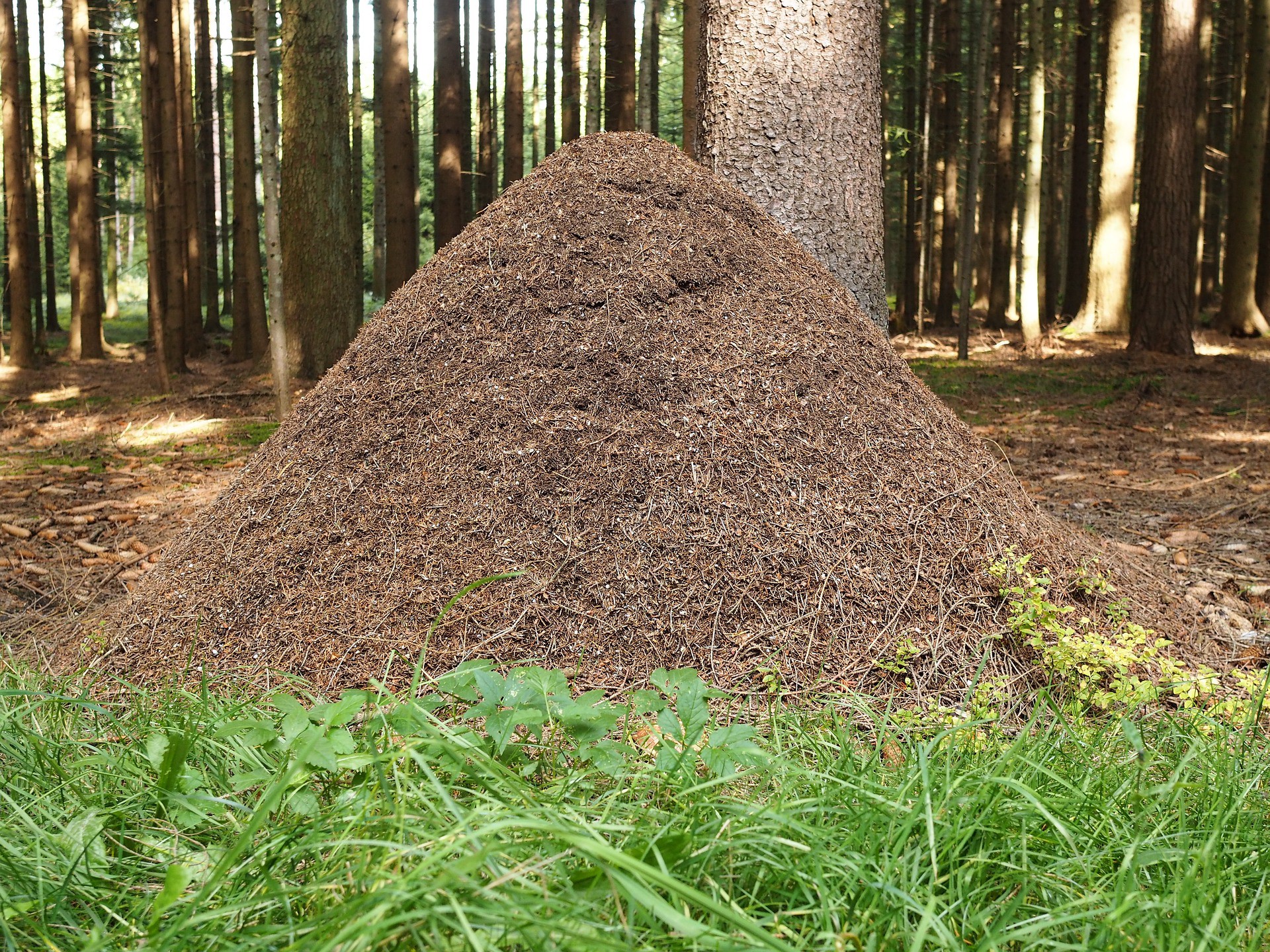
As I grew more and more fond of these creatures and amazed by their creations, I was flooded with an immense amount of guilt as memories from my childhood surfaced.
I’m ashamed to admit that I have on multiple occasions been complicit in the intentional destruction of an anthill.
I also once served as an accomplice in an attempted ant arson attack via magnifying glass. The attempt itself failed, but it enabled to me to use assonance in its description years later.

I’m overcome with emotion, realizing now how dark my childhood truly was.
But I’m not the only one. Kids step in anthills all the time, whether intentionally or negligently. It’s a horrific cycle of destruction.
As if ants don’t already have enough to worry about, with a beast out there called an “ant-eater”.
However frightening this is, it would’ve been crueler to name them “ant-lovers” and catch the ants totally off guard.
I was starting to feel sorry for these poor little insects. I wanted to help.
So, out of my newfound appreciation for ants and mound architecture, and in an attempt to right the wrongs from my past, I’d like to offer a bit of advice to some of my ant readers.

#1: Fire your mound location scout
While the dirt engineers, mound architects, and tunnel planners are widely considered to be some of the great intellectuals of our time, the location scouts are idiots.
The decision to build the structure that will house your entire community in the center of a well-trodden field is a recipe for disaster.
I’m not trying to victim-shame. I get it, you were there first. But how many Saturdays in a row does the mound have to be trampled by the U8 girl’s soccer team before the lesson will be learned?

These ants are constantly having to evacuate their homes, pouring out in a panic to regroup and restart the building process.
Its a vicious cycle, and its especially tough on those poor ant children who are constantly having to relocate and change schools.
Sure ants are strong. They can lift up to 30x their body weights. But it can’t be easy to carry the weight of the emotional trauma that comes with a constant destruction of their homes.
This problem is surprisingly simple to fix.
Studies show that moving the mounds to the edges of the field significantly reduce the likelihood of accidental mound destruction, and makes it more difficult for psychopathic intentional mound destroyers to locate you.

But those psychopaths are still out there, and if motivated, they still can find you.
#2: Think like a killer
To begin, I conducted a survey of 300 local anthill destroyers aged 7 through 13 to try and understand the “why” behind their destructive habits.
The most common answer was, “I don’t know,” but when I dug a bit deeper, I was able to get more insight.
One boy told me through suppressed tears, “They bit my sister.”
This boy acted in a crime of passion, attempting a mass ant genocide in order to avenge his sister’s slightly swollen, itchy big toe.
But by far the most haunting response was, “Its interesting to watch them evacuate in such havoc.”
Chills.
This is the answer of a true psychopath, but I believe it is something that we can work with.
#3: Quarterly evacuation drills
It is a bit surprising how unorganized the evacuation process is.
Ants are notoriously organized in every other aspect of their lives. They walk in single-file lines everywhere they go, but then a shoe clips the corner of their mound and its pandemonium.
Not anymore.
First, it’ll be less interesting for these psychopathic children to observe an organized exit than a chaotic scramble, which should reduce interest.
And second, when inevitably there is an emergency, the colony is prepared. Everyone knows how to get to the nearest exit, where to meet, and where to go.

It both prevents destruction and helps prepare for disaster at the same time. Seems like a no-brainer.
#4: Infiltrate the humans’ education system.
This is the most effective way to protect your mound.
By infiltrating the education system, you can mold the mind of our youth with pro-ant propaganda, eventually leading an entire generation to believe that anthills must be protected at all costs.
This strategy worked for the bees after decades of indoctrinating our children who now believe that bees are “essential to the ecosystem.”
While this is more of a long-term solution, and my focus is currently on the quick, easy fixes, I’d be happy to meet with the queen and talk it over if she is interested.
 I Just Realized Something